Design Leadership
Creating the conditions for designers to grow, stay aligned, and deliver stronger work across projects.
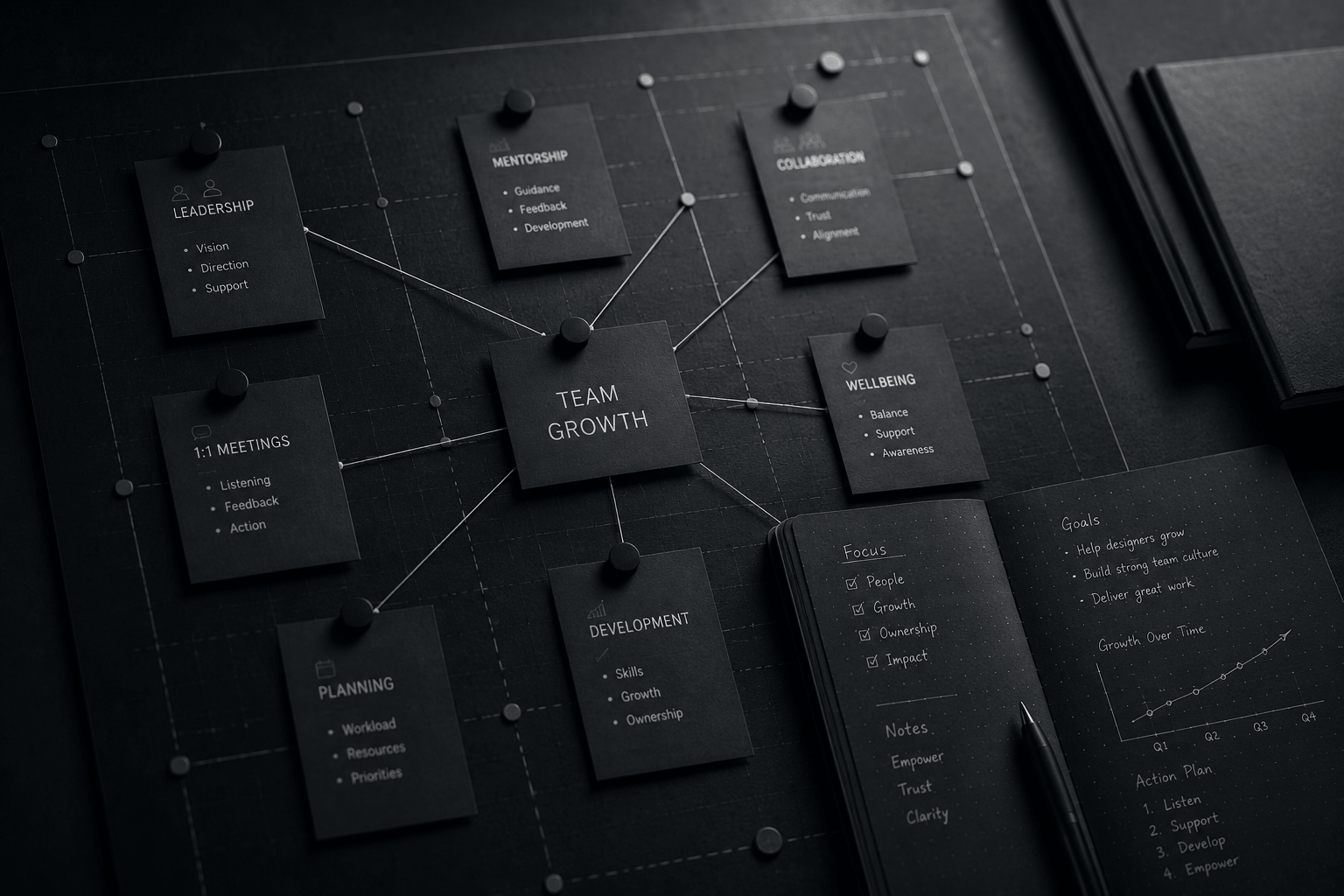
My Design Lead experience combines people support, workload planning, design quality, team development, and project coordination.
The role was not only about managing tasks. A large part of the work was about creating a healthier environment where designers could grow, stay aligned with project expectations, take more ownership, and deliver better work across different contexts. I worked with a design team that varied around 5 designers on average and reached up to 8 designers across the full period.
Design work often depends on the right balance between people, priorities, deadlines, and project needs. As a Design Lead, I supported task distribution, workload visibility, resource balancing, and priority alignment across projects. This included regular check-ins with designers, alignment with Project Leads, and escalation when additional support or backup was needed.
Covered areas:
• Workload planning
• Resource balancing
• Priority alignment
• Task distribution
• Delivery coordination
• Cross-lead communication
• Backup planning
• Risk visibility
Tasks were distributed based on designer workload, competencies, project priorities, delivery timelines, and current team capacity. When workload issues appeared, the process involved communication with other Design Leads, Portfolio Lead, and Design Ops when needed.
A strong team needs more than task management. Designers need feedback, direction, growth opportunities, and a clear understanding of where they can improve. I supported designer growth through one-to-one meetings, structured feedback, Individual Development Plans, skill matrices, and regular discussions around hard and soft skills.
Covered areas:
• One-to-one meetings
• Performance feedback
• IDPs
• Skill matrices
• Career development discussions
• Hard skill feedback
• Soft skill feedback
• Designer profile notes
Feedback was collected not only from personal observation but also from Project Leads and team members. Hard skills included UI/UX solutions, Figma file maintenance, design system usage, and ability to work with new technologies. Soft skills included communication, collaboration, presentation skills, ownership, and time planning.
Healthy collaboration is an important part of sustainable design delivery. I paid attention to workload pressure, motivation, emotional state, communication issues, and unclear or difficult situations inside the team or client/project context. This helped identify risks earlier and support designers before small issues became bigger problems.
Covered areas:
• Motivation check-ins
• Emotional state awareness
• Team wellbeing
• Trust building
• Healthy collaboration
• Communication issues
• Conflict awareness
• Informal check-ins
Monthly conversations included workload, project and non-project activities, communication issues, motivation, and emotional state. This created a clearer picture of how each designer was doing beyond only task completion.
Design teams need to stay adaptable, especially when the market and technology are changing quickly. I supported continuous learning through workshops, internal courses, knowledge-sharing sessions, and development initiatives connected to both team needs and project demands. This included encouraging designers to share knowledge, lead small activities, explore new skills, and build broader ownership beyond daily delivery tasks.
Covered areas:
• Internal workshops
• Knowledge sharing
• Internal courses
• Typography training
• Peer learning
• Hard skill development
• Soft skill development
• Future-focused learning
• Ownership growth
Learning topics could include UX/UI practices, dashboard design, research, conflict management, design systems, variables, typography, AI-related tools, and other skills relevant to future project or client needs.
A good onboarding process helps new designers understand not only the tools, but also how the team works. I supported onboarding through structured materials, process explanations, check-ins, and adaptation support. The goal was to help new team members understand workflows, standards, communication practices, project context, and expectations faster.
Covered areas:
• Onboarding support
• Onboarding deck
• Process explanation
• Tooling guidance
• Weekly check-ins
• Probation feedback
• Adaptation support
• Team guidelines
Onboarding materials helped preserve important information that could otherwise be lost in informal explanations. They also made it easier to communicate team processes, project expectations, design standards, and ways of working to new designers.
Value
This leadership layer helped improve:
• Designer growth
• Workload visibility
• Team alignment
• Collaboration quality
• Delivery stability
• Knowledge sharing
• Adaptation of new designers
• Trust inside the team
• Readiness for changing project needs